Showing posts with label U.S. Election Assistance Commission (EAC). Show all posts

Thursday, February 25, 2016

Meet the Nation's New Election Integrity Watchman


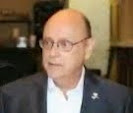
Thomas Hicks became Chairman of the Election Assistance Commission on Feb. 24, 2016. He previously served as the agency's vice chairman. Dave Levinthal/Center for Public Integrity

The Election Assistance Commission (EAC), is a bipartisan Federal agency tasked with adopting voting system guidelines, distributing grants and otherwise aiding states in improving their election processes.

Now, after years of turbulence, three of the agency’s four Commissioner slots are filled, enough, at least, to function. And today, Thomas Hicks, a Democrat and former Attorney for the Committee on House Administration, assumes the EAC Commission’s Chairmanship. For Hicks, the post is years coming: President Barack Obama initially nominated him in early 2010, but the U.S. Senate didn’t appoint him to the EAC until late 2014. His challenges are numerous, from helping ensure elections are free and fair to grappling with advocacy groups’ outrage over the actions of his agency’s Executive Director.


The Center for Public Integrity recently spoke with Hicks about his plans for his one-year Chairmanship, which will coincide with 2016 Presidential and Congressional elections.

Center for Public Integrity: What are your top agenda items for the year that you’ll have the chairmanship?

Thomas Hicks: I would like to focus on the machine issue — to insure that the states that bought machines with [Help America Vote Act] funds in the last 10 years or so have those machines up and running and are up to the standards they should be. I want to make sure that those with disabilities are not being left behind. HAVA is very strong in saying that it [aims] to ensure that those with disabilities have the same access to the ballot, and the same opportunity to cast those ballots. Third, I want to get more people involved … We can encourage states to recruit more poll workers. We can encourage states to get more information out to voters. A fourth thing: More states should participate in online voter registration. You get rid of a lot of [the] issues you have with poor handwriting, clerical errors, errors in general. It saves money and more people are likely to use electronics now as opposed to use a paper form of registration.

But there was no mention of the current controversy over the Executive Director approving, Alabama, Georgia, and Kansas, citizenship requirement on Federal registration forms and the ongoing litigation.

CLICK HERE to read the interview, that has been edited for length and clarity, and an article by Dave Levinthal.


NYC Wins When Everyone Can Vote! Michael H. Drucker
Digg! StumbleUpon

Monday, February 22, 2016

Obama's Administration Making Sure Non-Citizen Vote in Upcoming Elections


Several well-funded organizations, including the League of Women Voters and the NAACP, are fighting efforts to prevent non-citizens from voting illegally in the upcoming presidential election. And the United States Department of Justice, under the direction of Attorney General Loretta Lynch, is helping them.

On February 12, these groups filed a lawsuit in D.C. Federal court seeking to reverse a recent decision by the U.S. Election Assistance Commission (EAC). The Commission’s decision allows Kansas and other states, including Arizona and Georgia, to enforce state laws ensuring that only citizens register to vote when they use a federally designed registration form.

An initial hearing in the case is set for today. Under Federal law, the EAC is responsible for designing the Federal voter-registration form required by the National Voter Registration Act, or Motor Voter Act, as it is commonly called. While states must register voters who use the Federal form, states can ask the EAC to include instructions with the Federal form about additional state registration requirements. Some states are now requiring satisfactory proof of citizenship to ensure that only citizens register to vote.

Under Article I, Secion 2 and the Seventeenth Amendment to the Constitution, states have the power to set the “Qualification requisite for electors.” As with many issues, many disdains the balance the Framers adopted in the Constitution and objects to this delegation of power to the states. They prefer to see power over elector eligibility centralized in Washington, D.C.

So when Arizona sought to include citizenship-verification requirements with voter-registration forms, groups including the League of Women Voters, People for the American Way, Common Cause, Project Vote, and Chicanos for La Causa, brought a lawsuit claiming that the EAC hadn’t approved such requirements. Incredibly, this fight over whether states can ensure that only citizens are voting went all the way to the U.S. Supreme Court. In 2013 in Arizona v. Inter Tribal Council of Arizona, a divided Court said that Arizona could not implement such a requirement unless and until the EAC agreed to change the instructions for use of the Federal form to include the Arizona requirements.

The majority opinion in that case, written by Justice Antonin Scalia, stipulated that if the EAC refused Arizona’s request to accommodate the proof-of-citizenship requirement, the state could sue the EAC and establish in court that “a mere oath will not suffice to effectuate its citizenship requirement and that the EAC is therefore under a non-discretionary duty to include Arizona’s concrete evidence requirement on the Federal Form.” The Court went so far as to say that Arizona could also claim that a refusal by the EAC would be “arbitrary,” since the agency “has accepted a similar instruction requested by Louisiana.” Indeed, the Court noted, the EAC had ”recently approved a state-specific instruction for Louisiana requiring applicants who lack a Louisiana driver’s license, ID card, or Social Security number to attach additional documentation” to the Federal voter-registration form.

Arizona asked, and a single bureaucrat at the EAC named Alice Miller, who was not an EAC Commissioner, but only the acting Executive Director, denied the request. It’s not even clear that Miller had the right to make this, or any other, decision. At the time, a quorum did not exist on the bipartisan, four-member independent commission. And that decision is starting to look even more suspect. It seems that Miller may not have been the one who actually made the decision after all. Sources inside the Justice Department say it was partisan, left-wing lawyers in the Voting Section of the Civil Rights Division at the Justice Department who actually drafted the denial letter.

This is significant for several reasons. First, the EAC is supposed to be an independent Federal agency. While the President is empowered to nominate Commissioners for the two Democratic and two Republican commission slots, in practice the President consults with the Majority leader of the Senate, Mitch McConnell, and the Speaker of the House of Representatives, Paul Ryan, as well as the leaders of the minority party in both houses, to pick the nominees. Because the EAC deals with Federal Election Administration, the legislation establishing the agency, the 2002 Help America Vote Act, was designed so as to provide the EAC with political balance and to be outside the President’s control. Allowing lawyers for the Voting Section to write agency policy obliterates all semblance of independence and bipartisan balance.

Once the EAC regained a quorum of commissioners and hired a new Executive Director, the agency reversed the previously announced policy and allowed Kansas and Arizona to include citizenship-verification requirements with the Federal voter-registration form. In other words, the EAC wound up doing the right thing, in accordance with the Supreme Court’s 2013 decision.

Which brings us to the League of Women Voters lawsuit filed on February 12. Kansas has asked to intervene in the case. Its pleadings make the allegations that partisan lawyers in the Voting Section wrote EAC policies that should have been written by the EAC, not an agency under the control of the President. It charges that: in the previous case concerning Kansas’s 2013 requested language, Kobach v. Election Assistance Commission, the United States Department of Justice drafted the response to Kansas’s 2013 request and presented that response to the States as if it were coming from the EAC itself. In effect, the Department of Justice commandeered the vacant ship that was the EAC and used that vessel to fight against the interests of the State of Kansas. If these allegations are true, and based on the history of the Voting Rights Section during this administration, they may well be, then the Eric Holder–run Justice Department was actively engaged in blocking an independent bipartisan Federal agency from allowing a state to verify that only citizens are registering to vote.

Like most Federal agencies, it is the Justice Department that is supposed to defend the EAC when it is sued. This current case has a potential conflict of interest, especially because those lawyers, if they were acting in a policy-making capacity instead of a legal capacity when they implemented the EAC’s prior position, may be potential witnesses in the case. It is a potential conflict of interest that District Court Judge Richard J. Leon should delve into deeply. He should ask Justice Department lawyers about it at the hearing on Monday, particularly if there are any signs that lawyers for the Federal government appear to be taking a dive instead of defending the EAC’s sound decision. And there is no question that Judge Leon should allow Kansas to intervene in this lawsuit to defend the EAC’s decision. All signs point to this Justice Department not conducting the type of high-quality, vigorous, professional defense it is obligated to provide.



NYC Wins When Everyone Can Vote! Michael H. Drucker
Digg! StumbleUpon

Tuesday, February 2, 2016

Did the EAC Capitulated to Kansas on Proof of Citizenship for Voting?


The battle has been between the U.S. Government and the states of Kansas and Arizona over whether they need to accept the “federal form” to register voters in Federal elections. These states did not want to accept the Federal form for voting because the form, unlike each state’s regular voter registration forms, did not require documentary proof of citizenship before voting.

After a bunch of litigation, where things stood until recently was: these states had to accept the Federal form for voting in Federal elections. Kansas took the position that it did not have to allow voting by those using the Federal form in state elections. A state court recently rejected this two-tiered voting system, but the issue was on appeal.

But now the U.S. Election Assistance Commission (EAC) his issued a letter which indicates the EAC has agreed to include the following State specific information about registering in Kansas. Within 90 days, one must provide the Kansas Election Officials with documentary proof of citizenship, from a list provided, in order to have one’s registration accepted. There’s a similar letter approved for Georgia.

This appears to be a capitulation by the EAC, which will now lead to disenfranchisement of anyone who registers with the Federal form but does not provide the documentary proof of citizenship within 90 days.

One question is whether the EAC Executive Director Brian Newby, himself from Kansas, acted on his own or with the agreement of the three EAC Commissioners. Inquiring minds want to know.

CLICK HERE to read the two page (PDF) EAC letter.


NYC Wins When Everyone Can Vote! Michael H. Drucker
Digg! StumbleUpon

Tuesday, August 25, 2015

Federal Grant Money Can Be Used to Pursue Voter Fraud


States are free to use federal grant money intended to improve how elections are run in order to pay for criminal investigations of potential voter fraud, the U.S. Election Assistance Commission (EAC) has ruled.

The federal commission, which oversees The Help America Vote Act (HAVA) spending, couldn't decide whether the spending was allowed because it had no members for years. The commission started operating again in January, when three appointees, two Republicans and a Democrat, joined after winning U.S. Senate confirmation, and it has been whittling away at unfinished business.

In a 3-0 decision that wasn't discussed in public, the members agreed in an Aug. 13, 2015 advisory that Iowa's use of the money was "allowable and reasonable." The Help America Vote Act requires states to ensure that voter registration records are accurate and leaves to them "the specific choices on the methods of complying," the advisory said.

The commission's opinion is a relief to election administrators in Iowa, who will not have to pay back $240,000 in federal money that was used for a contentious voter fraud investigation that ended last year. But critics of Iowa's investigation said they were surprised that the commission found that HAVA grants could be used for such a purpose, and worried that other states could follow suit.

Months before the 2012 presidential election, then Iowa Secretary of State Matt Schultz reached an agreement to pay the salary and expenses of a full-time Iowa Division of Criminal Investigation agent for two years. Schultz, a Republican, asked the agent to investigate "instances of potential criminal activity in the areas of voting, voter registration, election misconduct and election administration." The investigation led to charges against 10 non-U.S. citizens and 16 ex-felons accused of casting ballots despite not having voting rights.

Democrats and civil rights groups called the investigation an attempt to intimidate voters and a waste of money. They also argued that it was an inappropriate use of funding from the HAVA, which was passed in 2002 to improve elections and has provided more than $3 billion to states. The money has been spent on items such as polling equipment, technology and training.

In a May 2014 report summarizing the investigation, the Iowa Secretary of State's office said it identified 117 illegal votes that were cast. The initiative "clearly improved the administration of elections" by removing illegal voters from registration lists and uncovering inaccuracies in the state's file of ineligible felon voters, the report said.

Prosecutors declined to bring charges in a majority of the cases, noting confusion and a lack of criminal intent in some cases.


NYC Wins When Everyone Can Vote! Michael H. Drucker
Digg! StumbleUpon