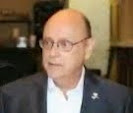


Thomas Hicks became Chairman of the Election Assistance Commission on Feb. 24, 2016. He previously served as the agency's vice chairman. Dave Levinthal/Center for Public Integrity
The Election Assistance Commission (EAC), is a bipartisan Federal agency tasked with adopting voting system guidelines, distributing grants and otherwise aiding states in improving their election processes.
Now, after years of turbulence, three of the agency’s four Commissioner slots are filled, enough, at least, to function. And today, Thomas Hicks, a Democrat and former Attorney for the Committee on House Administration, assumes the EAC Commission’s Chairmanship. For Hicks, the post is years coming: President Barack Obama initially nominated him in early 2010, but the U.S. Senate didn’t appoint him to the EAC until late 2014. His challenges are numerous, from helping ensure elections are free and fair to grappling with advocacy groups’ outrage over the actions of his agency’s Executive Director.

The Center for Public Integrity recently spoke with Hicks about his plans for his one-year Chairmanship, which will coincide with 2016 Presidential and Congressional elections.
Center for Public Integrity: What are your top agenda items for the year that you’ll have the chairmanship?
Thomas Hicks: I would like to focus on the machine issue — to insure that the states that bought machines with [Help America Vote Act] funds in the last 10 years or so have those machines up and running and are up to the standards they should be. I want to make sure that those with disabilities are not being left behind. HAVA is very strong in saying that it [aims] to ensure that those with disabilities have the same access to the ballot, and the same opportunity to cast those ballots. Third, I want to get more people involved … We can encourage states to recruit more poll workers. We can encourage states to get more information out to voters. A fourth thing: More states should participate in online voter registration. You get rid of a lot of [the] issues you have with poor handwriting, clerical errors, errors in general. It saves money and more people are likely to use electronics now as opposed to use a paper form of registration.
But there was no mention of the current controversy over the Executive Director approving, Alabama, Georgia, and Kansas, citizenship requirement on Federal registration forms and the ongoing litigation.
CLICK HERE to read the interview, that has been edited for length and clarity, and an article by Dave Levinthal.

NYC Wins When Everyone Can Vote! Michael H. Drucker


No comments:
Post a Comment