Showing posts with label Sheldon Silver. Show all posts

Tuesday, December 1, 2015

NY Assemblyman Convicted of Political Corruption


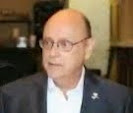
Sheldon Silver, an Assemblyman who rose from the Lower East Side to become one of New York State’s most powerful politicians, was found guilty on Monday in a Federal corruption trial, in Federal District Court in Manhattan, ending a case that was the capstone of the government’s efforts to expose the seamy culture of influence peddling in Albany.

Mr. Silver, 71, a Democrat who served more than two decades as the Assembly Speaker before he was forced to resign after his arrest in January, will automatically forfeit the Assembly seat to which he was first elected nearly 40 years ago.

The jury’s verdict came in the fifth week of Mr. Silver’s trial in which he faced seven counts of honest services fraud, extortion and money laundering. He was convicted on all counts.

This is yet another high profile case in which a politician has been convicted of corruption while there are still some basic disagreements about how to prove corruption when there is no evidence of an explicit quid pro quo, or when it is not clear whether what is being traded is political benefits or personal benefits. So far the Supreme Court has not provided much clarity.

CLICK HERE to read an article by Benjamin Weiser and Susanne Craig in the New York Times.


NYC Wins When Everyone Can Vote! Michael H. Drucker
Digg! StumbleUpon

Friday, December 28, 2012

NY Election Law Suggested Changes

New York Assembly Speaker Sheldon Silver introduced legislation Thursday that would allow New Yorkers to vote up to two weeks before Election Day and force greater disclosure of the money behind political advertising.

The first bill, co-sponsored by Staten Island Assemblyman Mike Cusick, a Democrat who chairs the Election Law Committee, would require each county to have at least five sites for early voting and open them each of the 14 days leading up to the November election.

The hope is to boost voter turnout. Currently, New Yorkers can only vote in person from 6 a.m. to 9 p.m. on Election Day, or by filling out an absentee ballot if they have a reasonable belief they'll be unable to get the polls. Thirty-two other states, including Florida and Ohio, have some form of early voting.

The second measure would force disclosure of the funding sources behind political ads and vote-getting efforts not coordinated with a candidate. These so-called "independent expenditure" campaigns are a growing force in New York elections: The New York State United Teachers union spent over $4 million to boost mostly Democratic candidates in 2012, and two downstate Super PACs spent over $500,000 supporting Duanesburg Democrat Cecilia Tkaczyk's bid for state Senate.

Just before Election Day, the State Board of Elections ruled that this spending only needs to be disclosed if it contains "magic words" that clearly direct voters to support or oppose a candidate. This standard did prompt disclosure by NYSUT and the pro-Tkaczyk PACs, but it is looser than definitions governing federal campaigns and elections in New York City.

Silver's bill would set the definition for state races more broadly, so that any campaign that is the "functional equivalent" of direct advocacy is required to disclose its spending and major donors.

"People are taking notice how much is being spent on independent expenditures," Silver said. "People are thinking it's the way to impact elections and avoid caps on donations. With the money that's being spent, it's important for voters to know who's behind those campaign messages."


NYC Wins When Everyone Can Vote!

Michael H. Drucker
Technorati talk bubble Technorati Tag in Del.icio.us Digg! StumbleUpon

Friday, July 13, 2012

NYC BOE Asks for a Change of Primary Date

In light of ballot-counting issues in last month's primary, the political calendar could be changed next year for the city's September 2013 primaries.

The New York City Board of Elections sent a letter to Albany in May saying its staff is going to need more time to certify mayoral primary results because the new electronic voting machines make the process a lot longer.

New York City Board of Elections Commissioner J.C. Polanco said he's worried the board won't have enough time to prepare for possible run-off elections if it's only given the allotted two weeks under the state's current election law to count votes.

"That's going to require us counting every single one of those ballots," he said. "So because of that, we're asking the legislature to consider a 30-day window by which we will be able to fulfill our obligations to the city of New York and to the election law."

A spokesman for Sheldon Silver said the Assembly Leader supports moving the 2013 state Primary to the June Congressional date.

Governor Andrew Cuomo has not taken a position on the issue, at this time.


NYC Wins When Everyone Can Vote!

Michael H. Drucker
Technorati talk bubble Technorati Tag in Del.icio.us Digg! StumbleUpon

Thursday, May 3, 2012

NY Fair Elections Act

Assembly Speaker Sheldon Silver introduced legislation geared to bringing “fair elections” to New York State by reforming campaign finance laws.

The 2012 Fair Elections Act (A.9885/S.7036-a), sponsored by Silver, D-Manhattan, and Senate Minority Leader John Sampson, D-Brooklyn, creates an optional public financial system for primary, general and special election campaigns that covers all statewide offices, state legislative offices and constitutional convention delegates.

Under the bill, a candidate for state office who meets a set of necessary requirements will be allowed to receive matching contributions of $6 for every $1 he or she raises on contributions of less than $250. The legislation requires a candidate to have a minimum number of small-dollar donors, who must be from the candidate’s district, to ensure large-dollar donors do not have overwhelming influence. Public funding would be capped at a specific limit, depending on the office being pursued.

Silver said fair elections “go to the heart of our democracy and are essential to preserving good government.”

“In light of the devastating effects the Supreme Court’s Citizens United decision has had on federal elections, we in New York should be leading the way in reducing the influence of money in our own elections,” said Silver, in reference to the 2010 decision that gave the green light to unlimited union and corporate campaign spending. “Let us be the model for the rest of the nation in establishing and preserving fair elections.”

The legislation requires candidates who receive public funding and are running opposed to participate in a minimum of one debate before the primary election and one debate prior to the general election. The bill provides several mechanisms for funding, including an income tax check-off of $5 that would be deposited into the newly created “New York State Campaign Finance Fund” and an additional 10 percent surcharge on recoveries from fraudulent practices in stocks, bonds and other securities.

Karen Scharff, executive director of Citizen Action of New York, commended the speaker for his “longstanding commitment” to reforming the state’s elections system.

“There’s no question that CEO campaign contributors have had too much control over our elections for too long,” said Scharff. “With the introduction of this bill, one more piece is in place to ensure that fair elections become law in New York state.”

Susan Lerner, executive director of Common Cause New York, said voters are “cynical” about government because of the “corrupting influence of money in politics.”

“Average people can’t compete against high dollar donations and lose trust in a government determined by highest bidder,” said Lerner. “We need fair elections to restore our democracy and ensure the meaningful participation of all New Yorkers.”

Gov. Andrew Cuomo has noted campaign finance reform as among the few initiatives laid out in his 2012 State of the State Address that have yet to come to fruition.

“There remains a large gap that needs to be closed when it comes to campaign financing,” said Cuomo in a cabinet meeting last Thursday. “But it’s an election year, so this issue isn’t necessarily a priority for the Legislature right now.”

The bill was reported to the floor during an Assembly Election Law Committee meeting last Thursday, with the Democratic majority conference voting unanimously in favor of the legislation and the Republican minority conference voting unanimously against it.

We hope this gets to the floor for a vote before the end of this year's session.


NYC Wins When Everyone Can Vote!

Michael H. Drucker
Technorati talk bubble Technorati Tag in Del.icio.us Digg! StumbleUpon

Saturday, November 19, 2011

NY Redistricting Update

From the New York Times By THOMAS KAPLAN.

As the State Legislature and the governor argue over how best to draw a new political map for New York State, a group of community leaders has filed a lawsuit asking a federal judge to take control of the contentious redistricting process.

The lawsuit, which names Gov. Andrew M. Cuomo and legislative leaders as defendants, asserts that the officials’ effort to redraw Assembly, Senate and Congressional district boundaries to reflect the most recent census “has stalled and threatens to throw the state’s 2012 elections into a quagmire absent court intervention.”

The lawsuit, filed on Thursday in Federal District Court in Brooklyn, follows similar legal challenges in more than a dozen states that are also in the midst of the often-bitter process of redrawing districts. In New York, it is the first major face-off in what seems likely to devolve into a chaotic legal battle, as well as a major fight in the legislative session that will begin in January.

A task force is working on drawing a set of political maps for consideration by the Legislature. But Mr. Cuomo has said he would veto those maps, because the panel is not independent. He has called on the Legislature to approve his plan for an independent commission; it has declined.

In an interview this week, the Assembly speaker, Sheldon Silver, a Manhattan Democrat, sketched out what he said could be a compromise — an eight-member bipartisan commission, with equal representation for each party, that would be appointed by the Legislature but made up entirely of people who are not lawmakers. The Democratic and Republican leaders in the Assembly and Senate would each appoint two members who would have equal funding, access to data and control of the map-making process.

“I think that goes a long way toward reform,” Mr. Silver said. “It wouldn’t be a political advantage to anybody. Majorities cannot just draw districts to the exclusion and the detriment of the minorities.”

Scott Reif, a spokesman for the Senate majority leader, Dean G. Skelos, a Long Island Republican, did not comment on Mr. Silver’s proposal, but he said: “Senate Republicans remain committed to a redistricting process that is bipartisan, open and fair. We look forward to continuing our discussions with the governor and others to enact a plan that is in the best interest of all New Yorkers.”

A stalemate between Mr. Cuomo and the Legislature would probably wind up in court, but the stakes for a legal battle are high and the timeline is short: The state primary elections next year could be as early as June, because of separate litigation over New York’s compliance with a federal law meant to ensure that residents serving in the military overseas have enough time to return ballots and be counted.

Among the six plaintiffs in the new redistricting lawsuit are a district leader in Brooklyn, a pastor in Westchester County and a lawyer from the Finger Lakes region who is mulling a State Senate bid. Their complaint described New York’s usual redistricting process as “an exercise in partisan self-dealing and incumbent protection.”

It also criticized the task force for not acting quickly enough to comply with a new law — the legality of which Republicans are disputing — specifying that for the purpose of drawing districts, prisoners should be counted in their hometowns, and not in the communities where the correctional facilities are located. Many prisoners are from downstate but are incarcerated upstate.

Richard Mancino, the lawyer for the plaintiffs, said that “the system here in New York is broken” and that lawmakers were intent on perpetuating the status quo “where the incumbents pick who their voters are going to be.” He said the possibility of primary elections as early as June made it prudent to mount a legal challenge now, instead of waiting until the legislative task force released a draft of district lines.

“If you wait for a flawed product to come out of the current system that will neither be independent nor nonpartisan nor apparently in compliance with the law,” Mr. Mancino said, “you’re going to be stuck with something that just won’t work.”

Mr. Mancino is a partner at Willkie Farr & Gallagher, the New York City firm for which Mr. Cuomo’s father, former Gov. Mario M. Cuomo, is of counsel. The law firm said he was not involved in the case.

Spokesmen for the current Governor Cuomo, Mr. Skelos and Mr. Silver declined to comment on the lawsuit.


NYC Wins When Everyone Can Vote!

Michael H. Drucker
Technorati talk bubble Technorati Tag in Del.icio.us Digg! StumbleUpon