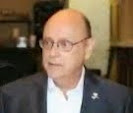


Other candidates for local office have also declined to participate in the city's campaign finance system, where small donations are matched with public funds at a rate of $6 to $1. But Mr. McDonald is the first to argue that he doesn't have to abide by the city's stringent contribution limits. Instead, Mr. McDonald maintains, he must abide by more lenient contribution limits set by the state.
The city's caps on contributions are intended to level the playing field and curtail the influence of money in politics. According to the city's Campaign Finance Board, a candidate for citywide office is prohibited from accepting an individual donation in excess of $4,950 for the primary and general elections combined.
But according to the state, the maximum individual contribution for mayor and other citywide offices is $19,700, in the Democratic and Republican primary and $41,100 in the general election.
In 2004, the City Council approved legislation that mandated every candidate for local office, not just those who voluntarily accept public matching funds, follow the city's contribution limits. But John Conklin, a spokesman for the state Board of Elections, said it's the state, not the city, that has the power to set limits for candidates who don't join the matching-fund system.
The state Board of Election's stance opens the door for other 2013 candidates to take their chances and sidestep the city's contribution limits, potentially flooding the campaigns for mayor, comptroller, public advocate, borough president and City Council with significantly higher donations than city law stipulates.
Richard Briffault, a professor of law at Columbia University, said the issue is legally unresolved because nobody has ever challenged the city authority to set its own limits.

NYC Wins When Everyone Can Vote!
Michael H. Drucker
 Technorati Tag in Del.icio.us


