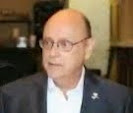


Tonight, I attended a reception and discussion at the Princeton Club of New York, given by The Centrist Project, a 501(c)4, titled "Can American Politics Be Repaired?".
The Centrist Principles
The goal is to empower the political middle, to elect centrist leaders, and to facilitate better governance.
The Project's goal is to help pragmatic candidates and voters solve America's policy challenges.
To that end, they have adopted a set of principles:
1. Make sense.
2. Appeal to a large and growing segment of Americans who are disaffected with the current system.
3. Embody the tools necessary to deal with America's most serious policy challenges.
The Speakers
Charles Wheelan, Founder of The Centrist Project. The organization is based on his book, "The Centrist Manifesto" (W.W. Norton), which outlines a set of: fiscal responsibility, environmental responsibility, social tolerance, and genuine economic opportunity for all.
- Senior Lecturer in Economics at Dartmouth
- 2009 Democratic candidate for Congress (IL, 5th District)
- Speechwriter, Maine Governor John R. McKernan, Jr.
Rusty Rueff, National Coordinating Co-Chair.
- Rusty is the Chairman of the GRAMMY Foundation
- 16-month leadership role as Coordinating National Co-Chair for Technology for Obama and for the reelection of President Obama
- Chief Executive Officer at SNOCAP
- Executive Vice President of Human Resources at Electronic Arts
- He and his wife, Patti, are the named benefactors of Purdue’s Patti and Rusty Rueff School of Visual and Performing Arts.
Greg Orman (Independent, Kansas). In 2014, Greg Orman pulled dead even in polls, after the Democrat pulled out, with incumbent Republican Pat Roberts in a race no one expected to be competitive. But after the Republican pouring millions in the last week, he lost. Orman's campaign revealed the hidden current of American politics: voters everywhere are tired of business as usual, and are ready to step up at the voting booth.
In 2014 the Centrist Project supported five candidates of various political affiliations. Although they did not achieve pure electoral success, they proved some remarkable things.
It is no longer the stuff of polling or political news articles. American voters are fed up with the Congress that uses our national welfare as a bargaining chip, they are fed up with politicians who represent their party first and their constituents second, and they are fed up with feeling like they are being ignored.
In 2014, they proved that these voters could be mobilized behind candidates that put issues first and politics second. They proved that frustrated voters in Massachusetts and California can be mobilized to support candidates in South Dakota and Kansas.
Every movement begins with someone deciding that it is time to take action. In 2014, thousands of Centrist Project supporters took action.
Even with a growing number of Americans fed up with the status quo, the question remained, "Would they step up at the voting booth?"
In 2014, the Centrist Project showed that they would. In states like South Dakota, Kansas, and Georgia, voters proved that they were ready to choose issues over partisanship, good governance over gridlock.
In Kansas and South Dakota they took this a step further, showing that Independent candidates, running on their pragmatic, bipartisan message alone, could draw support from across the spectrum and make voters believe that government can work again. These weren't soft numbers, these had party candidates running scared and put partisans throughout the political world on notice.
Their success showed that American voters are ready to embrace a new brand in American politics, yet it also revealed how far the parties are willing to go to win. When they couldn't beat us with their message or their candidates, they simply drown us in spending.
They learned that the best message and best candidates can't overcome millions of dollars spent in party infrastructure: in grassroots organizing, voter files, political staffing, or advertising. In 2016, they will put this lesson to work.
The strategy is to elect 5 independent centrist candidates. This will act as a fulcrum for change and use disproportionate power to align the two parties to reach sensible compromise on important issues.
In 2016, they are developing an Election Support Engine, a diverse array of tools designed to level the playing field between Independent and party candidates. In 2016 they will have the best tools as well as the best candidates and issues.
Electronic Support Engine
- Construct a national database of financial supporters
- Build a bench of campaign & political consultants
- Assemble voter lists & target centrist profiles
- Grow centrist independent brand & media presence
- Establish nationwide dedicated supporters
SENATORS UP FOR RE-ELECTION IN 2016
DEMOCRATS
Michael Bennet (Colorado)
Richard Blumenthal (Connecticut)
Barbara Boxer (California) - Retiring in 2016
Patrick Leahy (Vermont)
Barbara Mikulski (Maryland) - Retiring in 2016
Patty Murray (Washington)
Harry Reid (Nevada) - Retiring in 2016
Brian Schatz (Hawaii)
Charles Schumer (New York)
Ron Wyden (Oregon)
REPUBLICANS
Kelly Ayotte (New Hampshire)
Roy Blunt (Missouri)
John Boozman (Arkansas)
Richard Burr (North Carolina)
Dan Coats (Indiana) - Retiring in 2016
Mike Crapo (Idaho)
Chuck Grassley (Iowa)
John Hoeven (North Dakota)
Johnny Isakson (Georgia)
Ron Johnson (Wisconsin)
Mark Kirk (Illinois)
James Lankford (Oklahoma)
Mike Lee (Utah)
John McCain (Arizona)
Jerry Moran (Kansas)
Lisa Murkowski (Alaska)
Rand Paul (Kentucky)
Rob Portman (Ohio)
Marco Rubio (Florida)
Tim Scott (South Carolina)
Richard Shelby (Alabama)
John Thune (South Dakota)
Pat Toomey (Pennsylvania)
David Vitter (Louisiana)
CLICK HERE to learn more about The Centrist Project and its members.

NYC Wins When Everyone Can Vote! Michael H. Drucker


No comments:
Post a Comment